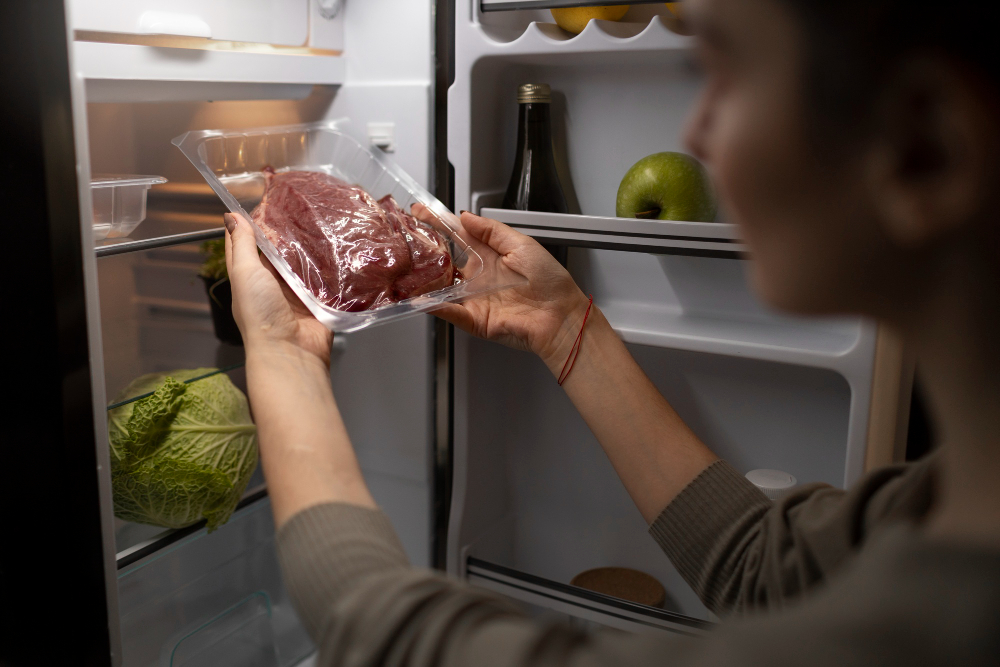
Your refrigerator’s light still comes on, but the milk doesn’t feel as cold as it should. Maybe you’ve also noticed a new clicking sound or that the fridge seems to run all day. Before you lose a week’s worth of groceries, it’s worth finding out what’s going on.
The compressor circulates refrigerant through your refrigerator’s cooling system. When it isn’t working properly, your fridge can struggle to stay cold. But other problems can cause similar symptoms, so these signs don’t automatically mean you need a new compressor.
Your Refrigerator Isn’t Staying Cold
 One of the first signs of a cooling problem is food that’s warmer than usual. You might notice drinks aren’t getting cold or items in the freezer are starting to soften.
A compressor problem is one possibility, but blocked air vents, dirty condenser coils, damaged door seals, and faulty fans can also affect cooling. Check that food packages aren’t covering the interior vents and that both doors close completely. If temperatures keep climbing, schedule service.
You Hear Repeated Clicking Without Cooling
An occasional click can be part of normal refrigerator operation. Repeated clicking paired with a warm refrigerator deserves more attention.
The compressor may be trying to start and shutting off before it can run. Sometimes the problem is a start relay, the component that helps the compressor get going, rather than the compressor itself.
A technician can test those parts before recommending a replacement. The sound alone isn’t enough to tell which part has failed.
It Runs Constantly but Still Feels Warm
 Your refrigerator may run longer after a grocery trip, during hot weather, or when the doors are opened frequently. Many newer models also use compressors designed to run for longer periods at lower speeds.
What’s concerning is a change in performance. If the refrigerator keeps running but can’t maintain its temperature, the cooling system needs attention. Turning the temperature setting colder won’t fix a failing component.
What Does This Mean for Your Food?
A refrigerator that feels slightly cool may still be too warm for safe food storage. Use an appliance thermometer to check the actual temperature instead of relying on how the air feels.
Your refrigerator should stay at 40°F or below, and your freezer should be at 0°F or below.
If the fridge isn’t maintaining a safe temperature:
- Move still-safe perishables to a working refrigerator or an ice-filled cooler kept at 40°F or below.
- Keep the doors closed as much as possible.
- Discard meat, poultry, fish, milk, eggs, and leftovers that have been above 40°F for more than two hours.
- Never taste food to decide whether it’s safe. A normal smell or appearance doesn’t guarantee safety.
If you don’t know how long perishable food has been too warm, don’t take a chance. Getting the refrigerator cold again won’t make unsafe food safe to eat.
Does a Failing Compressor Mean You Need a New Refrigerator?
 Not necessarily. The issue could be a smaller component, and even a confirmed compressor failure deserves a repair estimate before you decide. Your refrigerator’s age, overall condition, and warranty coverage can help guide that choice.
At Aggieland Appliance Repair, we help homeowners in Bryan and College Station find out why their refrigerators aren’t cooling properly. If your fridge is getting warmer and your groceries are at risk, schedule a repair with us today!