


Dealing with an oven that’s not cooperating can quickly derail dinner plans. At Aggieland Appliance Repair, we know how frustrating it is when your appliance acts up. Before you call for a service appointment, there are a few common issues you can often diagnose and sometimes even fix yourself.
Here is a straightforward guide to help you troubleshoot the most frequent oven problems.
Problem 1: The Oven Won’t Heat Up At All
If your oven is completely cold, it’s usually due to a power issue or a faulty heating element.
-
Check the Power Supply:
-
Is it properly plugged in? This might sound obvious, but it’s easy to miss.
-
Did a circuit breaker trip? Go to your home’s breaker panel and check the breaker dedicated to the oven. If it’s tripped, flip it off and then firmly back on.
-
-
Inspect the Heating Elements (Electric Ovens):
-
Look at the bake and/or broil elements inside the oven. A working element should look whole.
-
If an element is broken, visibly split, or has a large blister on it, it has likely failed and needs to be replaced.
-
Problem 2: The Oven is Not Heating to the Correct Temperature
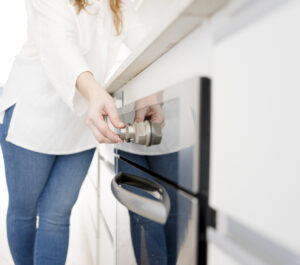 If your food is consistently undercooked or overcooked, your oven’s temperature is inaccurate.
-
Calibrate with a Thermometer:
-
Don’t rely solely on the built-in reading. Purchase a separate, reliable oven thermometer and place it inside the oven.
-
Preheat the oven to a set temperature and wait 20 minutes. Compare the reading on your thermometer with the oven’s display. If the difference is more than 25 degrees, you have a calibration issue.
-
-
Faulty Temperature Sensor (Electric/Gas):
-
The temperature sensor probe (a small rod inside the oven cavity) could be failing. If it’s touching the oven wall or is visibly damaged, it may be sending incorrect readings to the control board.
-
-
Worn-Out Igniter (Gas Ovens Only):
-
For gas ovens, the igniter is what draws current to open the gas valve. If the igniter is weak, it may not generate enough heat to open the valve fully, leading to an underheated oven.
-
Problem 3: The Oven Door Won’t Close Properly
An ill-fitting door lets heat escape, leading to wasted energy and uneven cooking.
-
Check the Door Gasket/Seal:
-
The rubber or fiberglass seal (gasket) around the oven door frame creates a heat-tight barrier. If this seal is brittle, torn, or hanging loose, it needs replacement.
-
-
Inspect the Hinges:
-
Heavy use can cause the door hinges to wear down or bend. Open and close the door, watching the hinges. If they appear crooked or the door sags, you might need new hinge assemblies.
-
Problem 4: The Oven Light is Out
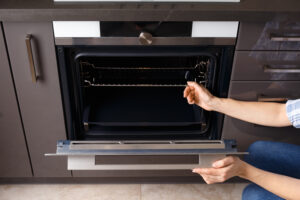 While not a functional problem, an interior light that is out makes monitoring your food difficult.
-
Replace the Bulb:
-
Oven lights are typically a standard appliance bulb and can be replaced easily. This is important to remember, you want to ensure you use a bulb specifically rated for high-heat oven use. A standard light bulb will quickly burn out or shatter.
-
Always unplug the oven or turn off the circuit breaker before attempting to replace the bulb.
-
When to Call Aggieland Appliance Repair
While some of these issues are simple DIY fixes, complex problems involving control boards, gas lines, or element wiring are best left to the professionals.
If you’ve checked the basics and your oven is still giving you trouble, don’t risk a potentially hazardous fix. Our certified technicians specialize in reliable, local appliance repair.
Got an oven problem that’s got you stumped? Contact us today to schedule your service!